



















Typically, foods can be introduced into the European market without pre-approval. However, novel foods and their ingredients are an exception due to the lack of adequate knowledge regarding their safety.

Novel foods include newly created or inventive foods made by using any new and advanced technologies or methods brought to the market later than 15 May 1997 and/or foods commonly consumed outside the EU but not within Europe prior to the same date.
How do you safely launch a novel food?
Before being marketed in the EU, novel foods must undergo a consistent safety evaluation by The European Food Safety Authority (EFSA).
This evaluation is to:
- Ensure consumer safety
- Avoid misleading information
- Maintain similarity to the conventional/existing foods they aim to substitute
These checks are in place to prevent any nutritional deficiencies during the novel food’s consumption.
The majority of cutting-edge foodtech ingredients - including various alternative proteins, precision-fermentation-derived components, edible insects, human milk oligosaccharides, and probiotics from non-traditional classifications - are categorized as novel foods. This means that a new composition of already approved food items will also need approval if it going to be publicly marketed.
This is something your company must be aware of so you can plan the safe launch of your novel food.
Timin to consider when taking a novel food to market
Broadly speaking, the EFSA requires the following criteria to be met in an application for a novel food to be approved:
- Consumer safety
- Compliant labelling to prevent misleading
- If aimed at substituting another food, it must not have lower nutritional value than the original food
The approval timeline
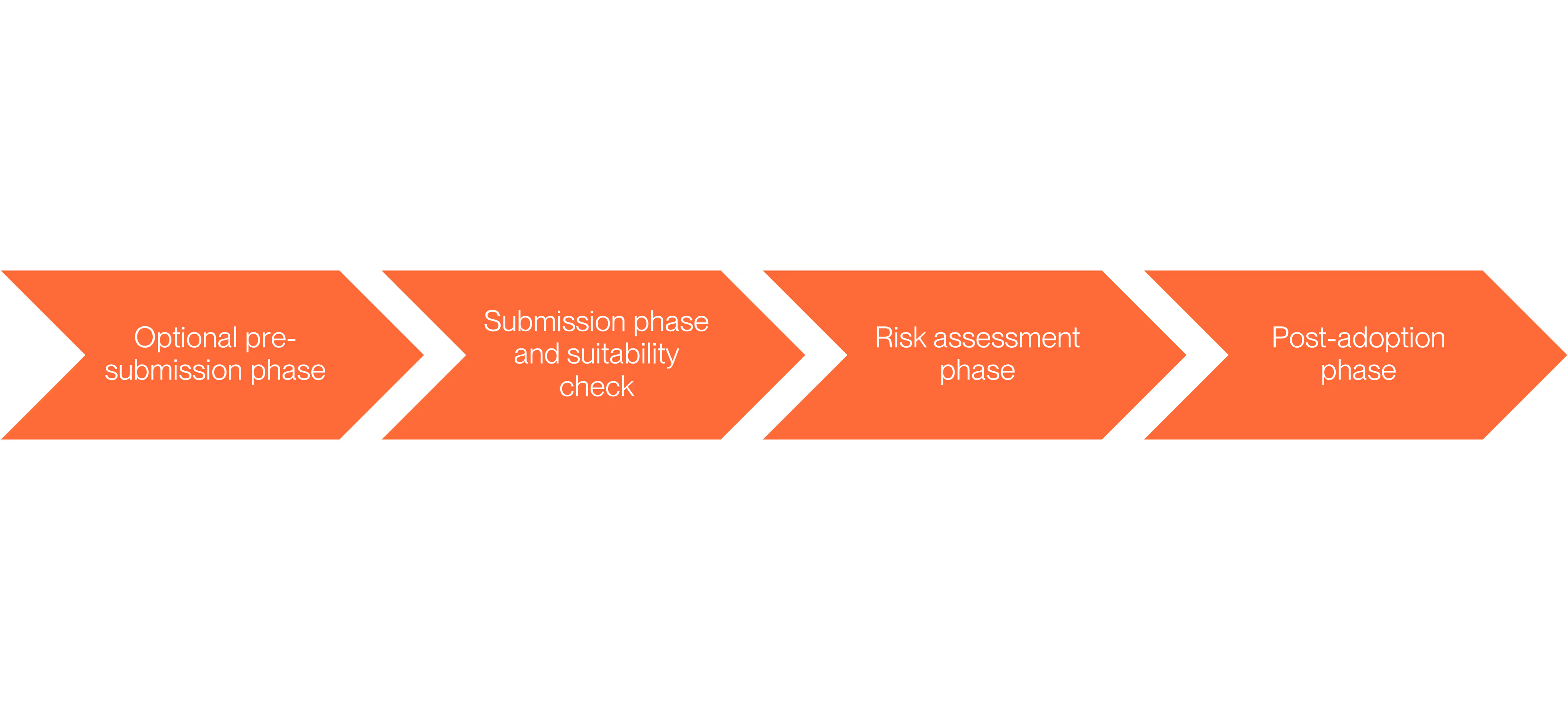
The current timeline for novel food approval within the EU ranges from 18 to 36 months. This can be a considerable time for business and start-ups - especially with constrained financial resources and the urgent need of introducing products to generate revenue.
What are the repercussions for not adhering to regulations (and how to prevent them)
Every discontinued application faces the identical outcome: a 6-month delay.
Following this period, the files can be re-presented, and the previously highlighted tests are not required to be redone. While this might offer some relief, adding another 6 months to an already long procedure can severely harm applicants.
Hence, it's essential for applicants to possess a complete understanding of this scenario to effectively strategize beforehand. They should coordinate all stakeholders engaged in their novel food processes, encompassing R&D, regulatory, manufacturing, and quality, to ensure proper coordination. This will ensure that the approval time could be the shortest possible without any delays.
Understanding the time-consuming nature of the EU's Novel Food approval process is crucial for businesses. Moreover, being mindful that even using already approved foods in new compositions, such as through fermentation or concentration, can necessitate approval, is equally important.
This awareness empowers businesses to proactively plan, ensuring compliance with regulations while navigating the complexities of introducing innovative food products. Such foresight aids in mitigating delays, enabling smoother market entry, and fostering success in the evolving landscape of novel food in the EU.
If you would like to discuss how best to protect and take a novel food to market, please contact our specialist foodtech team today.
Some additional reference points that may be useful: