





















The EUIPO’s new Geographical Indication Hub has just been launched. It brings together everything you need to know about GIs (Geographical Indications)

The EUIPO’s new Geographical Indication Hub has just been launched. It brings together everything you need to know about Geographical Indications (GIs) including:
- Insights into specific legislation
- EUIPO tools for searching existing GIs in the EU
- An extensive list of frequently asked questions
- The latest news articles about GIs published by the EUIPO
In accordance with the EU GI legal framework, the protection of GIs categorises products as either a 'protected designation of origin' (PDO) or a 'protected geographical indication' (PGI) based on the degree of connection between the product's qualities and its geographical origin.
To earn GI status, you need to satisfy certain demands, for example is a certain proportion of the raw materials being sourced from the region in question or does the majority of the production process occur within the specified geographic area?
A quick rundown of GIs regarding agricultural products and foodstuffs, wines and spirit drinks
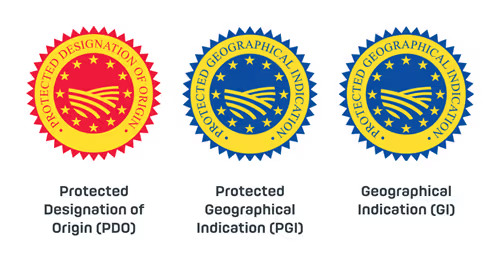
Here is a summary of the demands the various classifications of food and drink products must satisfy to qualify for a GI.
PDO
- Products: Food, agricultural products, wines
- Specifications: All aspects of production, processing, and preparation must occur within the designated region, ensuring that wine production uses grapes solely from the same geographical area (e.g., Kalamata olive oil)
PGI
- Products: Food, agricultural products, wines
- Specifications: For most products, one of the production, processing, or preparation stages occurs in the region. For wine, this entails using at least 85% locally sourced grapes for production.
GI
- Products: Spirits (alcoholic drinks)
- Specifications: At least one of the stages of distillation or preparation takes place in the region, however raw products do not need to come from the region (e.g., Irish Whiskey which has been brewed distilled and matured in Ireland, but the raw materials are not exclusively from Ireland).
The aims of EU quality schemes
When product names are closely tied to their place of origin, they can receive a GI designation. This GI recognition not only fosters consumer trust and product differentiation but also assists producers in enhancing their marketing efforts.
Products being considered for or already possessing GI recognition are documented in GI registers. These registers also contain details about the geographical and production criteria for each product. Acknowledged as a form of intellectual property, GIs are assuming an increasingly significant role in trade negotiations between the EU and other nations.
As of November 2022 there were almost 3500 names in the EU registers:
- Food: 1601
- Wines: 1627
- Spirits: 259
And another 1669 non-EU protected under bilateral agreements.
The importance of protected GIs
GIs play a crucial role in upholding elevated food quality and standards. They also seek to safeguard our cultural, gastronomic, and local heritage by certifying their authenticity worldwide.
Furthermore, these protected rights hold enormous economic value. The estimated total sales value of EU GI’s is above 75 billion euro, equal to 6,8 % of the total EU food and drink sales!
Arla Foods case
Arla had to stop their production and export because the use of “Feta-cheese”. This term is now reserved solely for cheese only made in Greece from sheep’s and goat’s milk and, furthermore, complies with a number of more precisely specified quality requirements (as above).
Since “Feta” was included on the EU's list of protected foods (GI’s), it has been illegal for companies outside of Greece to sell cheese under the label "feta" within the EU.
Staying informed about GIs is vital for businesses looking to build value by safeguarding their products’ authenticity and cultural origins. Potter Clarkson can provide the essential guidance you need on regulations, helping businesses navigate so please contact us with any questions you have or to arrange an initial free consultation.
In the meantime, here are a few reference sources that may be helpful: